Wildlife in La Fortuna: Sloths, Toucans and Frogs
Costa Rica holds around five per cent of the planet's known species on roughly a third of a per cent of its land. Around Arenal you do not have to work hard for it — but you do have to know when to look, and slow down enough to see.

Sloths
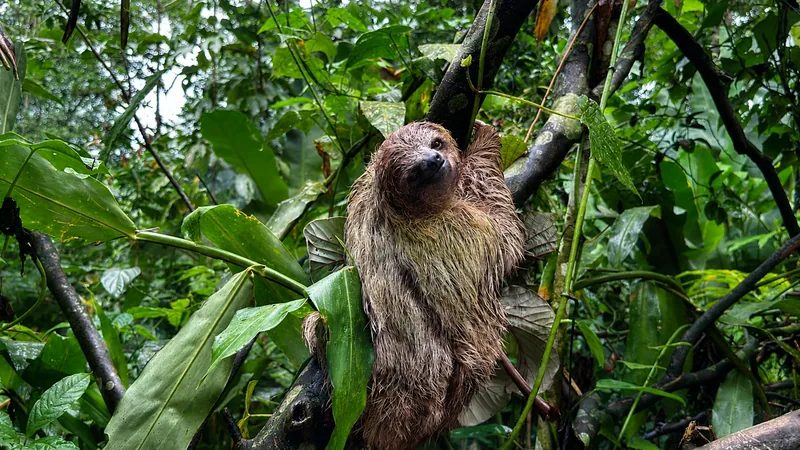
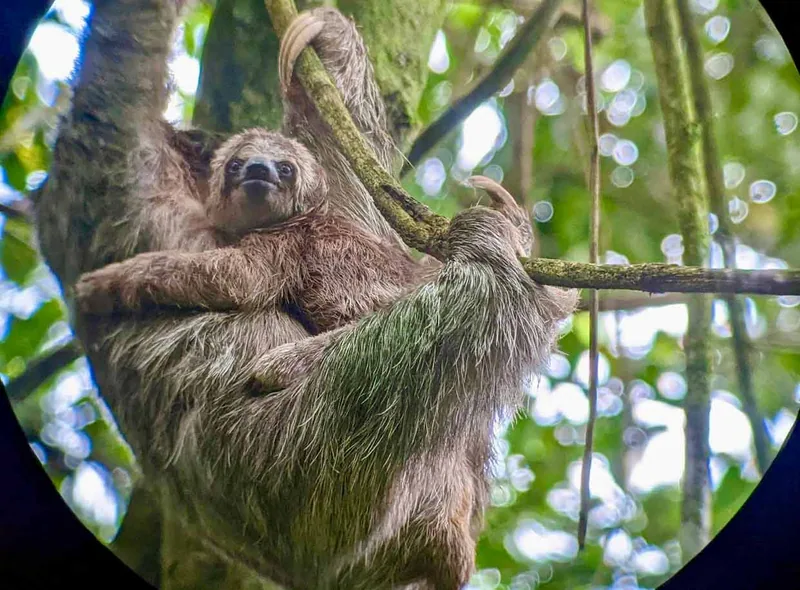
The animal everyone asks about. Two species live here: the brown-throated three-toed sloth, which has the round face and the permanent half-smile, and Hoffmann's two-toed sloth, which is larger, shaggier and mostly nocturnal.
Look for cecropia trees — tall, pale-trunked, with wide hand-shaped leaves and a thin, open canopy. Cecropia is a favourite food and the sparse foliage makes sloths far easier to see than in dense growth. Then look for what appears to be a clump of dead leaves or a termite nest wedged in a fork. That is usually the sloth.
They move roughly forty metres a day, so once one is found it will still be there tomorrow.
Birds
This is a serious birding region. The obvious stars:
- Keel-billed toucan — the rainbow bill. Noisy, and often in small groups in the canopy at dawn.
- Chestnut-mandibled (yellow-throated) toucan — bigger, with a yodelling call you will learn to recognise within a day.
- Montezuma oropendola — crow-sized, with hanging woven nests like long teardrops and an extraordinary liquid gurgling call given while hanging upside down.
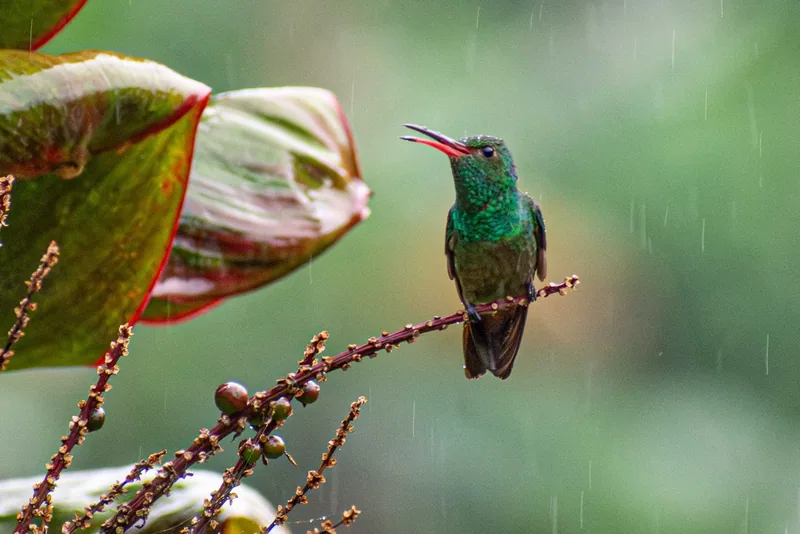
- Hummingbirds — many species, and they will come to feeders and flowering shrubs constantly.
- Great curassow, aracaris, motmots, trogons — all present, all findable with a guide.
Dawn is when this happens. By nine the chorus has largely stopped.
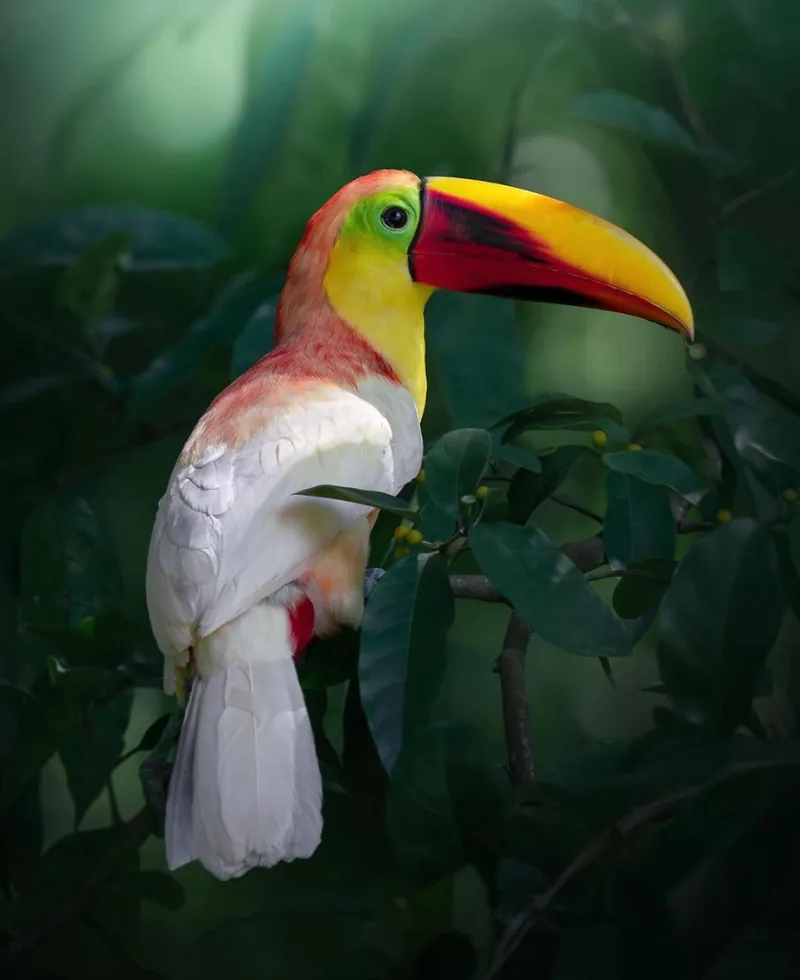
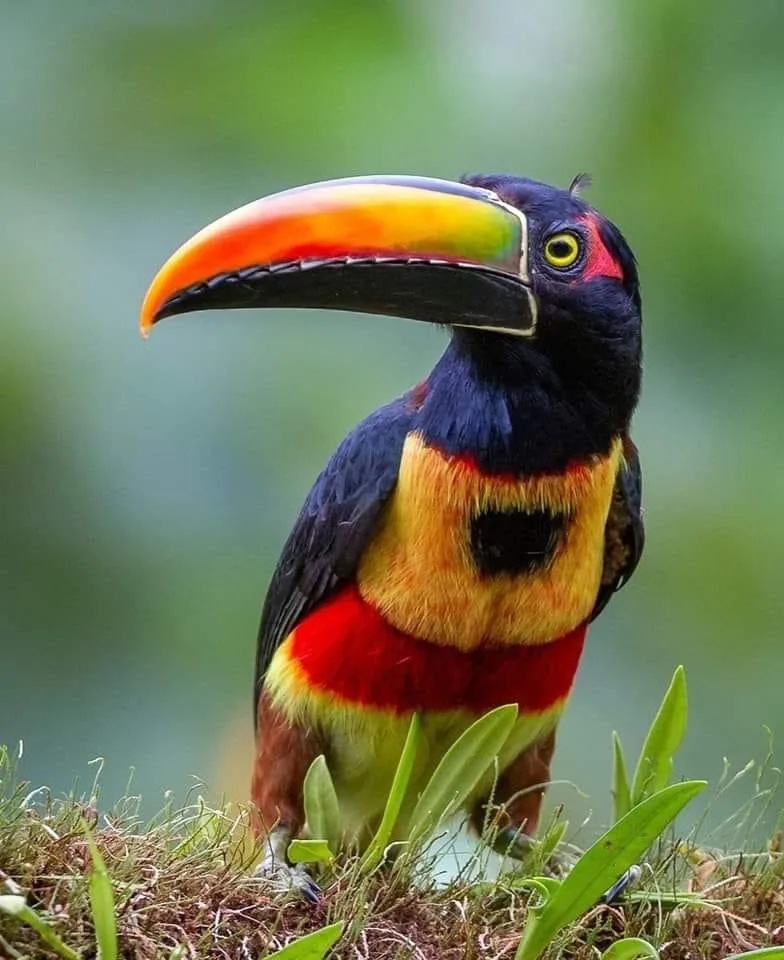
The toucans are the birds people come hoping for, and they are genuinely common here — but they sit high and still, so you hear them long before you see them. The aracari is the small cousin: same absurd bill, a third of the size, and far more willing to come down to fruiting trees at eye level.
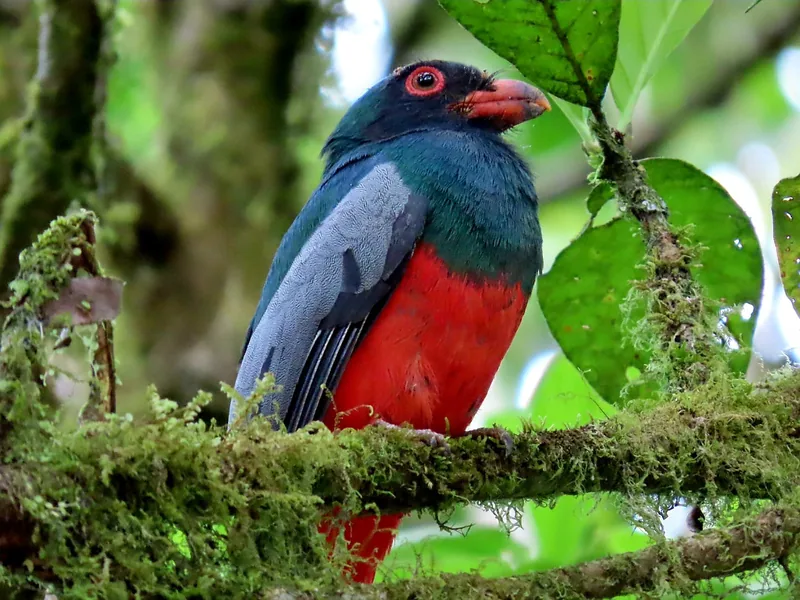
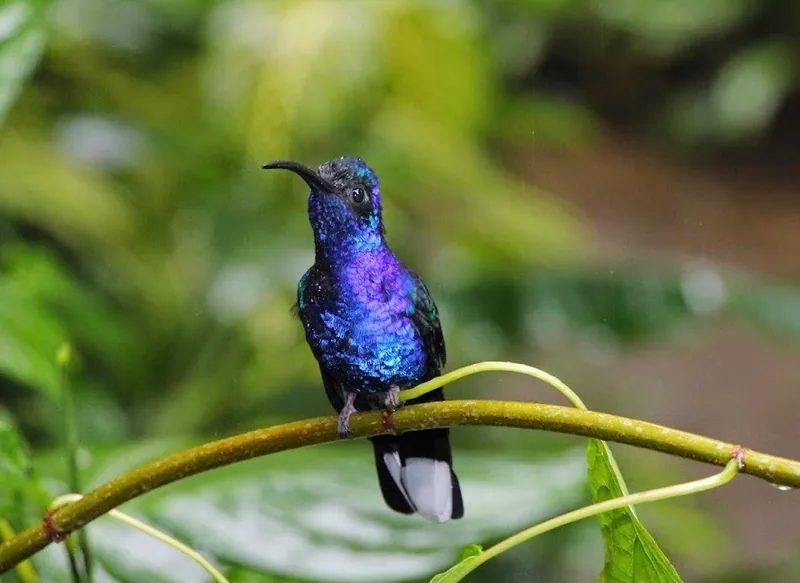
Trogons are the opposite problem — they perch motionless for long stretches, which makes them easy to photograph and almost impossible to spot unaided. This is where a guide with a scope earns their fee. Hummingbirds need no finding at all: put out flowering shrubs and they arrive.
Frogs
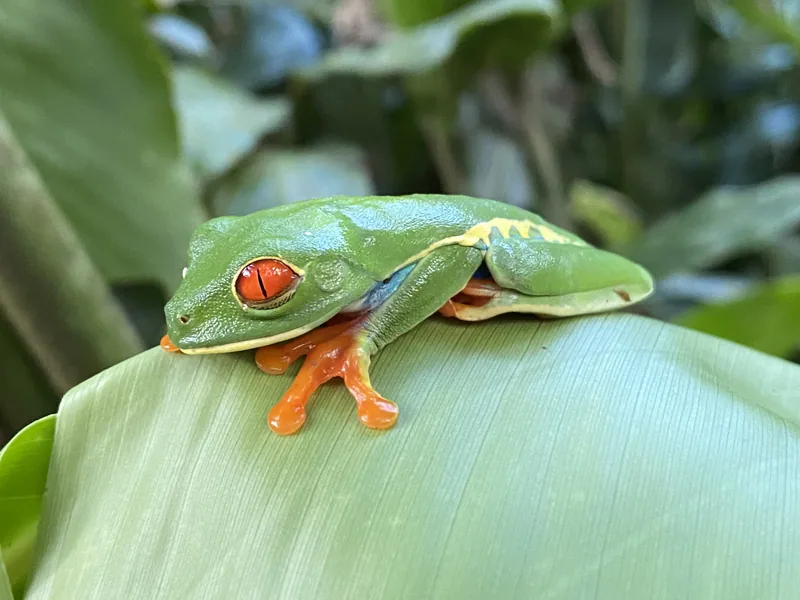
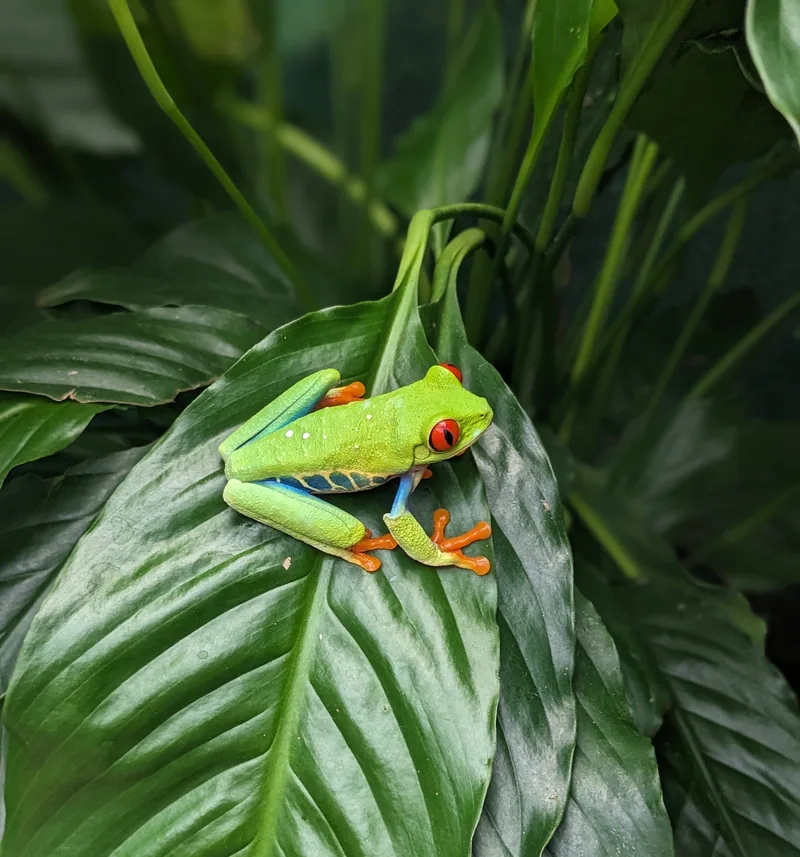
The red-eyed tree frog is the postcard animal of Costa Rica and it lives here — but it is nocturnal, and you will almost certainly not stumble on one by accident in daylight. A guided night walk is how people see them.
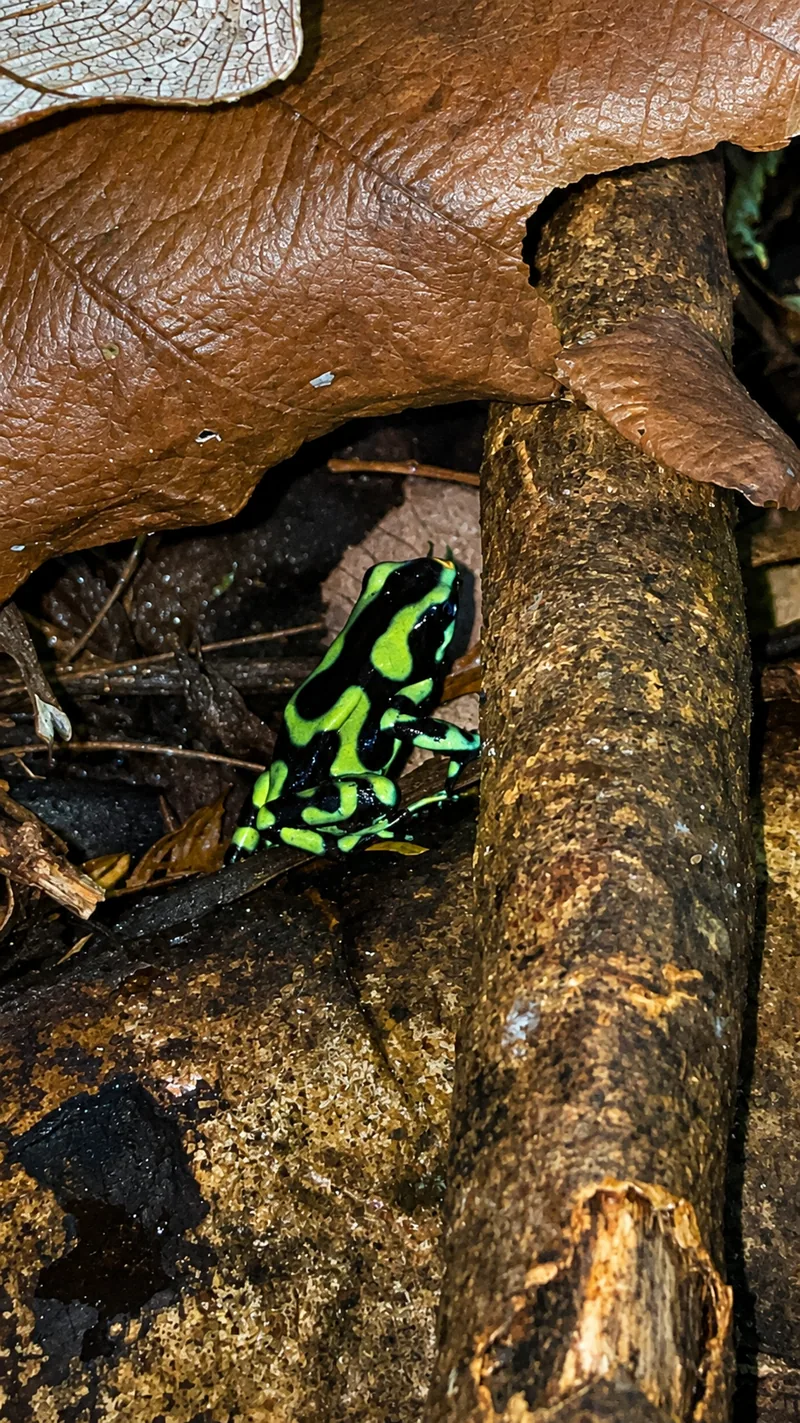
Poison dart frogs are the other draw, and there are two you are likely to meet. The strawberry dart frog is tiny and brilliant red with blue legs, and hops around leaf litter in daylight. The green-and-black dart frog is bigger, marbled emerald over black, and turns up on wet logs and buttress roots. Both are active by day, which makes them far easier to find than the tree frogs. Neither is dangerous to look at — they are only toxic if eaten. Do not handle them, for their sake more than yours.
At night the whole forest sounds like an electronic instrument. That is mostly frogs.
Monkeys: which ones you will actually see
Three species live around Arenal, but they are not equally likely. If you are hoping for monkeys in La Fortuna, expect howlers.
| Species | How likely | Where |
|---|---|---|
| Mantled howler | Common — heard daily, seen often | Canopy and forest edge, including trees on the property |
| White-faced capuchin | Occasional | Continuous forest; reliable on the Pacific coast, not here |
| Geoffroy's spider monkey | Rare | Deep, unbroken forest away from roads and towns |
Howler monkeys are the ones you will hear before dawn — a deep, roaring sound that carries for over a kilometre and that most first-time visitors mistake for something much larger and much more dangerous. It is a leaf-eating monkey weighing roughly 5 to 9 kg, with the males at the heavy end.
That diet is exactly why they are the monkey you see here. Howlers eat leaves, which are abundant even in the patchwork of pasture, second-growth and roadside trees around La Fortuna and El Castillo, so they persist in fragmented forest where fruit-dependent monkeys cannot.
White-faced capuchins are the clever, curious ones, and the ones that will take food if you leave it out. Do not feed them; it makes them aggressive and it makes them ill. They range more widely and forage lower down, so on the Arenal side they are a good day rather than an expectation — if you want a near-guarantee of capuchins, that is Manuel Antonio or Cahuita, not here. Spider monkeys need large tracts of unbroken canopy and are genuinely rare near towns.
One species people ask about and will not find: squirrel monkeys live only on Costa Rica's central and southern Pacific coast. There are none around Arenal.
Everything else
- Coatis — raccoon relatives with long snouts and upright ringed tails, travelling in groups along roadsides. Very common and very used to people.
- Agoutis — large rodents that look like long-legged guinea pigs, common on lawns and forest edges at dawn and dusk.
- Iguanas and basilisks — the basilisk is the one that runs across water, which earns it the name Jesus Christ lizard.
- Leafcutter ants — genuinely worth stopping for. Highways of green fragments moving through the undergrowth, feeding an underground fungus farm.
- Bats, kinkajous, olingos — after dark, and best with a guide and a torch.
How to actually see things
Hire a naturalist guide at least once. This is the highest-value money you will spend on wildlife here. A good guide carries a spotting scope, knows which specific trees held a sloth last week, and will find ten animals in the time it takes you to find one. They will also set the scope up on a toucan so everyone in the group gets a proper look, which is not something binoculars do for eighteen people.
Beyond that: go early, be quiet, stop walking. Most people miss wildlife because they are moving and talking. Stand still for five minutes in one place and the forest starts resolving into individual animals.
Where the wildlife is easiest
The hanging bridges put you at canopy height, which is where most of the animals actually are — it is the single best structured wildlife walk near La Fortuna. Arenal Volcano National Park's forest trails are good early. The Bogarín Trail in town is small, cheap and unusually reliable for sloths.
And the quiet side of the volcano is better than the busy side. El Castillo has less traffic, less light and more forest edge, which is why sloths, toucans and howlers turn up in the trees on the property itself rather than only on organised excursions. The Majestic Lodge sits in that forest with a deck facing it — a decent number of guests get their first toucan sighting from a chair with a coffee, before anyone has organised anything.