Arenal Volcano: Hiking It, Seeing It, Staying Beside It
Arenal is the reason most people come to this part of Costa Rica. It is a near-perfect cone, 5,437 feet of it, and it dominates everything for miles. Here is what you can actually do with it — and the one thing almost every visitor gets wrong.
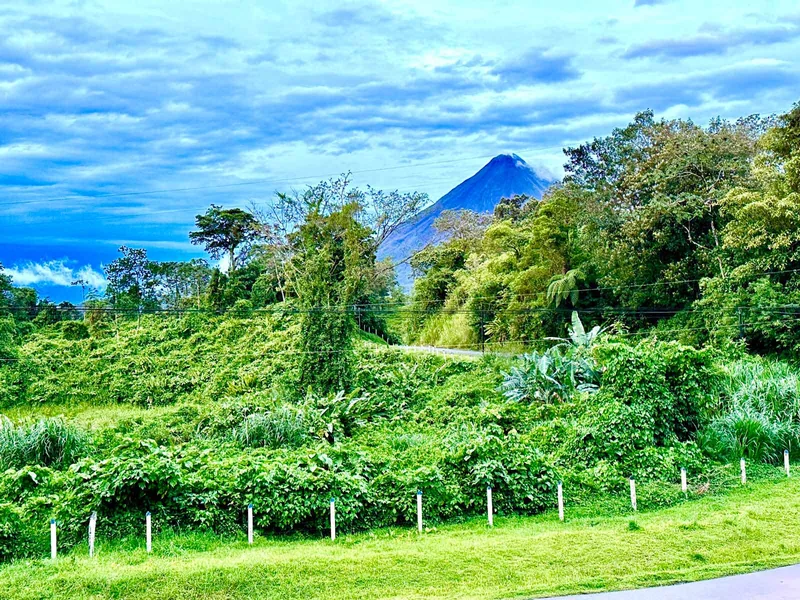
Can you climb it?
No — and this is the first thing to get straight. The summit of Arenal has been closed to climbers for decades. It is an active volcano with unstable ground and no safe route, and people died attempting it before the closure. Anyone offering to take you to the top is not running a legitimate tour.
What you can do is hike the lower flanks and the hardened lava fields, which is a genuinely good walk and gets you close enough to feel the scale of the thing.
Arenal Volcano National Park
The national park protects the volcano's base and the forest around it. The main trails are well maintained, mostly flat to gently climbing, and take somewhere between one and three hours depending on how much you link together.
| Trail | What it is |
|---|---|
| Las Coladas | Out across the 1992 lava flow. Black rock, low scrub, and the closest legitimate approach to the cone. The best one if you only walk one. |
| Los Tucanes | Longer, quieter, through secondary forest at the base. Good for birds and for getting away from the tour groups. |
| El Ceibo | A loop through older forest around a huge ceiba tree. Shaded, easy, and the most likely place to see wildlife. |
| Mirador | A short spur to a viewpoint over the lava field and, on a clear day, up the cone. Ten minutes, worth it. |
Bring water and expect mud in the green season. Trail runners or light hiking shoes are plenty; you do not need boots.
The 1968 lava fields
Next to the national park is a privately managed reserve on the ground destroyed by the 1968 eruption — the eruption that killed 87 people and reshaped this entire valley. The trails there climb higher onto the flow than the national park allows, and the views back over Lake Arenal are the best on that side of the mountain.
It is a separate ticket from the national park. If you have one morning and want the single best volcano walk, most guests we send there come back saying it beat the park.
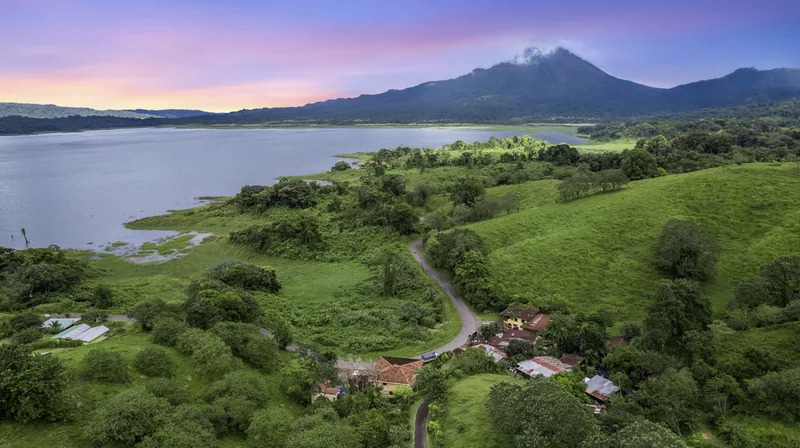
When is the volcano actually visible?
This is the part nobody tells you, and it is the difference between a good trip and a disappointed one. Arenal generates its own cloud. Warm, wet air rises up the cone, cools, and condenses into a cap that sits on the summit. It does this in dry season and green season alike.
The practical rule: early morning is when the summit is clear. Between roughly 5:30am and 8am you get the best odds, and the odds fall through the day as the cloud builds. By mid-afternoon the top is hidden more often than not.
This is the strongest argument for sleeping near the volcano. If you are already here at six in the morning, you get seven attempts across a week and you will almost certainly get a clear cone at least once. If you drive in from San José for an afternoon, you get exactly one attempt, at the worst hour of the day, and the odds are against you.
Is it still erupting?
Not the way it was. Between 1968 and 2010 Arenal was one of the most consistently active volcanoes in the world, throwing glowing rock down its flanks most nights. That is what built La Fortuna's tourism industry, and it is what the older photographs show.
In 2010 it went quiet. It is still classified as active, it still vents gas, and the rock beneath it is still hot enough to heat the groundwater — which is precisely why the hot springs exist. But there is no lava to watch at night, and any tour promising it is selling you something from fifteen years ago.
Which side should you stay on?
La Fortuna town sits on the east side. It has the restaurants, the tour desks and most of the big hot-springs resorts, and it is busy.
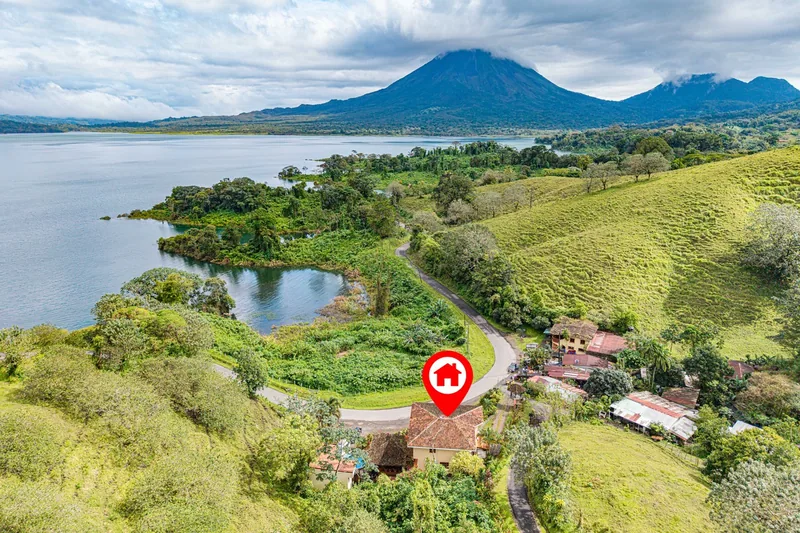
El Castillo, on the south-west shoulder, is the quieter side. It is higher, it faces the cone directly across the valley, and it looks out over Lake Arenal at the same time. There are no crowds, and the traffic is a fraction of what runs through town. It is a rougher road in — a gravel section for the last stretch — and that is exactly why it stayed quiet.
Seeing the volcano with a group
Most volcano advice is written for two people. With fifteen or twenty it changes. Tour vans seat eight, so a group of twenty is three vehicles and three different arrival times. Park entry is per person. And the 6am window that gets you a clear summit is not a window you can hit if everyone is staying in different hotels across town.
The Majestic Lodge faces the volcano from El Castillo, with 10 bedrooms under one roof and the cone visible from the deck, the pool and most of the bedrooms. Everyone wakes up in the same building and walks outside to the same view. We also run the transport, so a morning at the national park is one coordinated trip rather than three carloads trying to find each other at the gate.