10 Typical Costa Rican Foods You Should Try
Costa Rican cooking is not loud. It is not especially spicy, and it does not try to impress you. It is fresh, savoury, built on rice, beans, plantain and whatever grew nearby — and once you have eaten it properly for a week you will miss it for years. Here are the ten dishes worth going out of your way for.
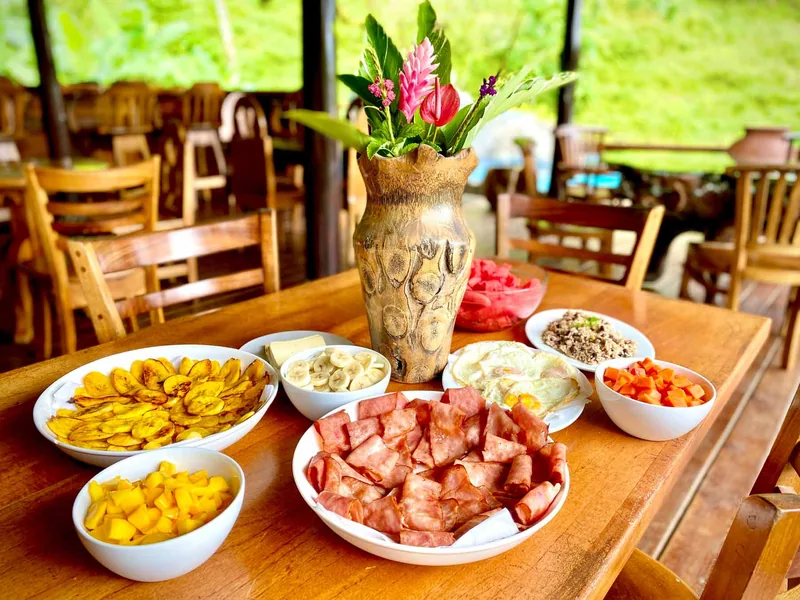
1. Gallo pinto
The national dish, and the one you will eat most. Rice and black beans cooked together — never simply mixed — with onion, sweet pepper, cilantro and a good splash of Salsa Lizano, which is what gives it that faintly sweet, tangy, unmistakably Costa Rican flavour.
It is breakfast food. It comes with eggs however you want them, fried sweet plantain, a slab of fresh white cheese and sour cream. The name means "spotted rooster," for the speckled look of black beans through white rice. Eat it every morning; you will not get tired of it.
2. Casado
The standard lunch, and the best-value meal in the country. One plate: rice, black beans, shredded cabbage salad, fried ripe plantain, and a protein — chicken, beef, pork chop or fish. Often a small serving of picadillo on the side.
Casado means "married." The usual explanation is that the components are wedded together on the plate; the other explanation, offered with a grin, is that it is what a married man gets fed at home. Order it at any soda and you will eat well for very little.
3. Olla de carne
A slow-simmered beef and vegetable stew, and the dish most Costa Rican families associate with Sunday. Beef shin cooked for hours with yuca, ñampí, chayote, corn on the cob, potato, carrot and green plantain — root vegetables that most visitors will not recognise and should absolutely try.
It arrives as a bowl of broth with the solids either in it or alongside, with rice to add. It is the single most comforting thing in Costa Rican cooking.
4. Chifrijo
A bar snack that became a national obsession, and a relatively modern invention — it dates to the 1990s. In a bowl: rice on the bottom, then beans, then chicharrones (crisp fried pork), then pico de gallo, avocado and a squeeze of lime, with tortilla chips to scoop.
The name is a compression of chicharrón and frijol. It is what you order with a cold Imperial, and it is very hard to stop eating.
5. Sopa negra
Black bean soup, but richer and darker than that makes it sound — the beans are cooked down with onion, garlic, sweet pepper and cilantro until the broth is almost black, then a whole poached egg is dropped in. Served with rice and a wedge of lime.
It is also, universally, what a Costa Rican will tell you to eat when you are unwell.
6. Arroz con pollo
Chicken rice, tinted yellow-orange with achiote and vegetables, studded with peas, carrot and sweet pepper. It is the dish that appears at every birthday, graduation and family gathering in the country, usually alongside potato salad and a stack of tortillas.
Simple, and done well it is excellent. Ask for extra Lizano.
7. Patacones
Green plantain, sliced thick, fried, smashed flat, then fried again until the edges go crisp and the middle stays soft. Salted while hot. Served with black bean dip, guacamole or ceviche on top.
Not to be confused with maduros — ripe plantain, sliced long and fried until caramelised and sweet, which is what comes on a casado. Both are good. They are entirely different things and it is worth knowing which you are ordering.
8. Ceviche
Costa Rican ceviche is its own style and lighter than most: white fish, usually corvina or tilapia, cured in lime juice with finely diced onion, sweet pepper and a lot of cilantro. No chilli heat as standard, no sweet potato, no corn.
It is served cold with patacones or soda crackers, and it is the best thing to eat on a hot afternoon.
9. Tamales
Costa Rican tamales are corn masa filled with pork or chicken, rice, vegetables and sometimes olives or a prune, wrapped in a banana leaf — not a corn husk — and steamed. The leaf perfumes the whole thing.
They are Christmas food above all. Families make hundreds in a single day in December, an event with its own name: tamaleada. You can find them year-round, but they are best in the season.
10. Tres leches
Sponge cake soaked in evaporated milk, condensed milk and cream, topped with meringue or whipped cream. Dense, wet, extremely sweet, and served everywhere.
If tres leches is too much, ask for arroz con leche — cinnamon rice pudding — or a slice of queque seco, the plain pound cake that Costa Ricans eat with coffee in the afternoon.
The things on every table
| Item | What it is |
|---|---|
| Salsa Lizano | Thin, tangy, mildly sweet brown sauce, made here since 1920. Goes on almost everything. Buy a bottle to take home; everyone does. |
| Chilero | Chopped vegetables and chilli in vinegar, kept in a jar on the table. This is how heat is added — by you, not by the cook. |
| Natural | Fresh fruit juice, blended to order, en agua (with water) or en leche (with milk). Try cas, tamarindo, or maracuyá. |
| Café chorreado | Coffee poured through a cloth sock filter on a wooden stand. Costa Rican coffee is superb and this is the traditional way to make it. |
Where to eat it
Look for a soda — a small, family-run restaurant, often with a handwritten menu and plastic chairs. Sodas serve the most authentic Costa Rican food at a fraction of tourist-restaurant prices, and the casado at a good soda will beat the same dish at a resort every time. We have a longer list in our guide to restaurants in La Fortuna.
Eating this way with a large group
Here is the practical problem. Taking eighteen or thirty people to a soda does not work — they have twenty seats. Taking a group that size to a restaurant that can seat you means eating tourist food at tourist prices, three times a day, for a week. The arithmetic gets ugly fast, and nobody wants to spend their holiday coordinating dinner reservations for thirty.
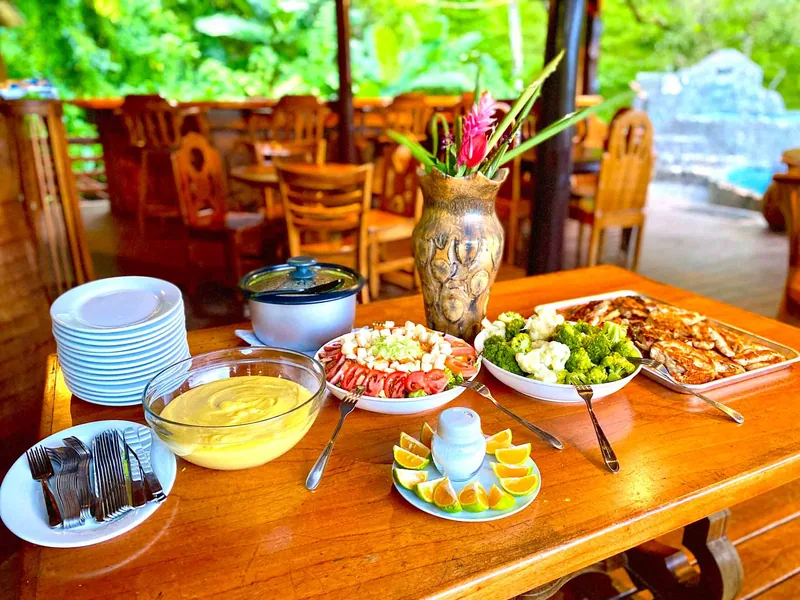
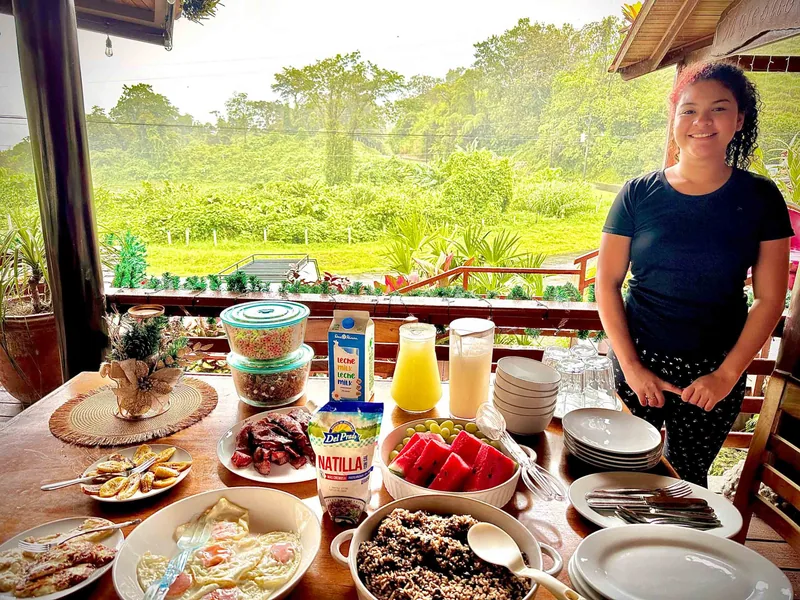
The Majestic Lodge has cooks on site. They make this food — gallo pinto and fruit in the morning, casados and olla de carne and arroz con pollo through the week — in the lodge's own kitchen, for everyone, at the same table. Breakfast is included for up to 16 guests, and lunch and dinner are available as an all-inclusive meal package.
It is the difference between visiting Costa Rican food and eating it. How the cooking works on a whole-villa stay →